Why moisture is such a persistent problem in Savannah
Savannah's climate creates conditions that challenge crawl spaces year-round. Summer brings average high temperatures above 90 degrees and relative humidity that frequently exceeds 80 percent. Even in winter, humidity rarely drops to the dry levels seen in inland climates. The city receives approximately 49 inches of rain annually, much of it in concentrated events during hurricane and storm seasons. For homes with crawl spaces — especially older homes built before modern moisture management standards — that moisture load is continuous. Ground water, surface runoff, tidal table fluctuations in lower-lying areas, and saturated soil after storms all contribute. The result is a crawl space environment where moisture is not an occasional problem but an ongoing condition that requires active management.
The three main sources of crawl space moisture
Crawl space moisture typically enters from three sources, and addressing each requires different approaches. The first is soil vapor — moisture rising as vapor from the ground through exposed soil. A vapor barrier or encapsulation liner addresses this directly by covering the soil and interrupting the upward migration of vapor. The second source is outdoor air. When warm, humid outdoor air enters a crawl space through foundation vents or gaps, it can condense on cooler surfaces like pipes and wood. Encapsulation and vent sealing address this by reducing air exchange with the humid outdoor environment. The third source is liquid water — actual water entry from rain events, surface runoff, plumbing leaks, or groundwater. This requires drainage solutions, grading improvements, or plumbing repairs. Identifying which sources are active in a specific crawl space requires a direct inspection.
Signs of crawl space moisture problems
Homeowners in Savannah report several common signs that indicate crawl space moisture is becoming a problem. Musty or earthy odors inside the home — particularly in areas close to the floor or in rooms above the crawl space — are one of the most common first indicators. Visible condensation on windows or interior surfaces during humid periods can point to elevated whole-home humidity with crawl space contributions. Floors that feel soft, springy, or slightly elevated in certain spots may indicate subfloor or joist damage from prolonged moisture exposure. Fallen or matted crawl space insulation is almost always moisture-related. Dark staining or discoloration on wood framing in the crawl space suggests prolonged moisture exposure. Any of these signs warrants a crawl space inspection.
Vapor barriers and moisture management
A vapor barrier is the most common first-line moisture-management solution for crawl spaces with exposed soil. A properly installed ground barrier significantly reduces the amount of moisture vapor that rises from the soil into the crawl space. For moderate moisture conditions, a vapor barrier installed by an experienced professional — with seams properly overlapped and edges secured to the foundation walls — can make a meaningful difference. For more challenging conditions, or where outdoor humidity through vents is also a factor, a full encapsulation system that includes wall coverage, vent sealing, and dehumidification provides more comprehensive control. The appropriate solution depends on the conditions found during inspection.
Dehumidification as part of moisture control
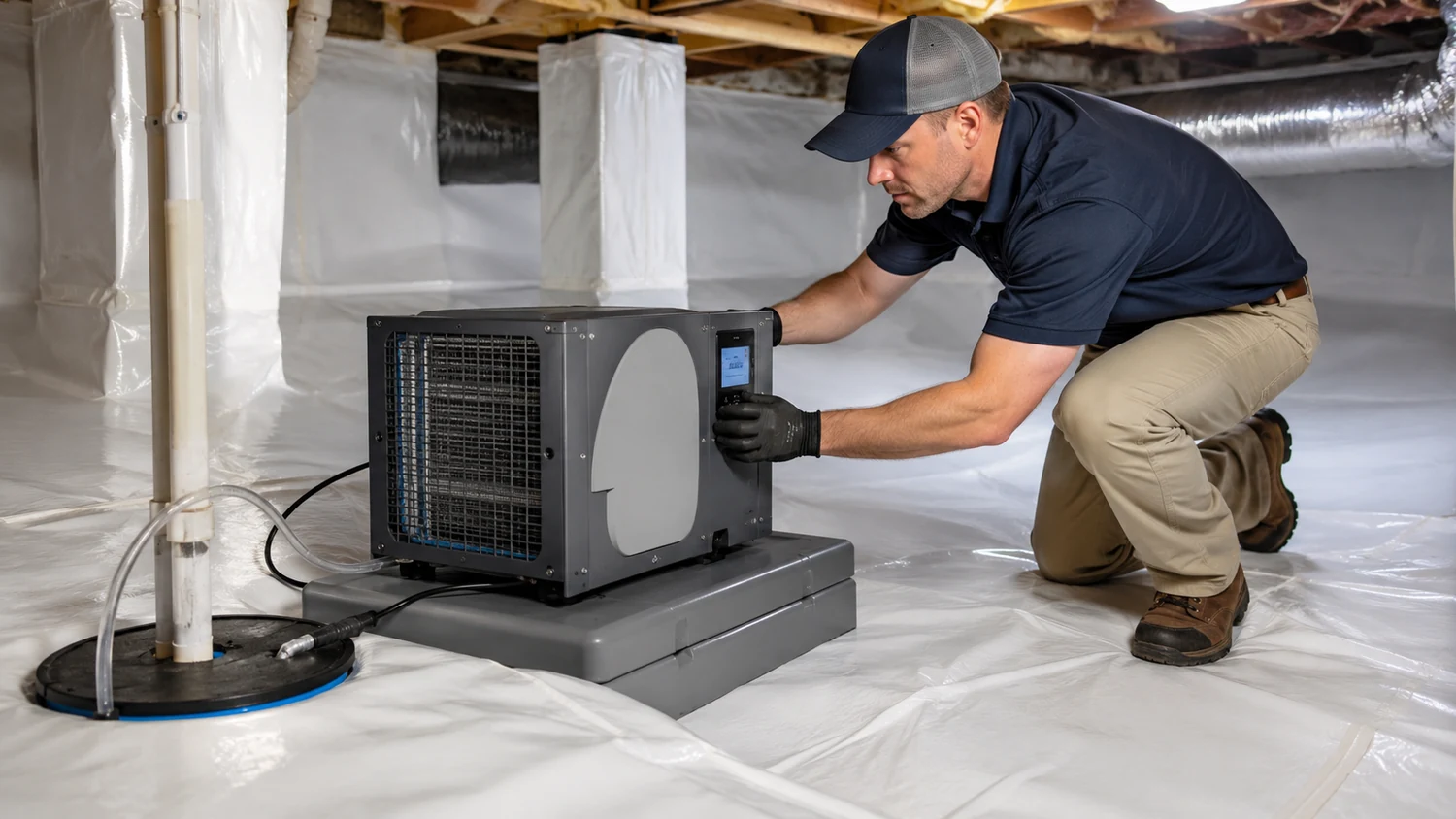
In crawl spaces where outdoor air exchange is a significant moisture source, or where encapsulation is in place but residual humidity remains elevated, a crawl space dehumidifier can be an important part of the moisture-control strategy. Unlike a standard household dehumidifier, crawl space models are designed to operate in unheated, low-clearance environments and to run continuously to maintain target humidity levels. Properly sized for the square footage of the space, a crawl space dehumidifier can maintain relative humidity at 50 to 55 percent or below — levels at which most moisture-related material degradation is significantly slowed. Dehumidifier integration is frequently part of a broader moisture-control or encapsulation project.
Drainage and standing water
If moisture control in your crawl space involves liquid water rather than just vapor and humidity, drainage is a separate but related concern. Standing water, wet soil after rain, and water flowing in through foundation openings all require drainage solutions that go beyond vapor barriers or dehumidifiers. Interior drainage channels direct water to a sump pump for removal. Exterior grading improvements redirect surface runoff away from the foundation. In some cases, plumbing leaks from supply or drain lines running through the crawl space are the primary water source and require a plumber before crawl space work can be meaningfully addressed. A thorough inspection that assesses drainage conditions is essential before any moisture-control work is scoped and priced.
What to expect from a moisture control estimate
A moisture-control estimate should begin with an in-person inspection of the crawl space. The specialist should assess the current condition of the soil, any existing vapor barrier or liner material, the condition of the insulation and wood framing, whether vents are open or sealed, and whether any water intrusion or active drainage issues are present. The written estimate that follows should specify what work is proposed, what materials will be used, and what the expected outcome is in terms of moisture management. Ask for a description of what the crawl space will look like after the work is complete and what follow-up maintenance — such as dehumidifier filter changes or periodic inspections — is recommended.
Important limitations
Crawl space moisture control can significantly improve conditions in a home, but there are important limits to what any single measure can achieve. No moisture-control product or installation can promise specific humidity levels under all weather conditions, address structural damage already present, or substitute for drainage work if liquid water is entering the space. Claims about mold elimination, health benefits, or energy savings should be approached with caution and verified against the specific conditions in your home. Savannah Crawl Space Repair provides homeowners with connections to local specialists for estimate requests — all work is performed by independent service providers, and all final recommendations should be based on an in-person inspection.