Why Savannah crawl spaces need attention
Savannah sits at sea level on the Georgia coast, surrounded by marshes and tidal wetways. Average annual humidity consistently runs above 70 percent, and the city receives roughly 49 inches of rain per year. For homes with crawl spaces — particularly the older bungalows, Craftsman cottages, and mid-century ranches common throughout Savannah, the Victorian District, Midtown, and Southside — that moisture has to go somewhere. Ground moisture migrates upward through exposed soil into the crawl space, where it contacts wood joists, subfloor material, and insulation. Over time, that combination of humidity and moisture creates conditions that damage structural materials, degrade insulation, and produce the musty odors that homeowners first notice in living areas above. Identifying and addressing the moisture source is the foundation of any crawl space repair plan.
Common crawl space problems in this area
The most frequent issues Savannah-area homeowners request estimates for include: persistent musty or earthy smells inside the home, especially after rain; wet or damp soil in the crawl space; condensation on pipes, joists, or the underside of the subfloor; insulation that has fallen away from the joists or become visibly wet and matted; standing water or saturated soil following heavy rainfall or plumbing leaks; and home inspection reports flagging moisture, inadequate vapor barriers, or evidence of wood damage. Some homeowners notice soft or springy spots in their floors, which can indicate subfloor or joist damage associated with prolonged moisture exposure. Others discover the issue when purchasing or selling a home and receiving an inspection report that requires repair documentation before closing.
What crawl space repair can include
Crawl space repair is not a single service — it is a category of work that encompasses several different solutions depending on what the inspection reveals. A vapor barrier addresses moisture rising from exposed soil. Encapsulation adds a complete sealed liner across the floor and walls, combined with moisture management. Drainage systems handle water that enters from outside through grading or groundwater. Dehumidifiers manage residual humidity in encapsulated spaces. Insulation replacement addresses material that has been damaged by moisture. In many cases, a repair plan combines two or more of these elements. The right combination depends on what is causing moisture to enter the crawl space, how severe the current condition is, and what access and structural factors exist. Every estimate should begin with an in-person inspection.
Understanding vapor barriers and encapsulation
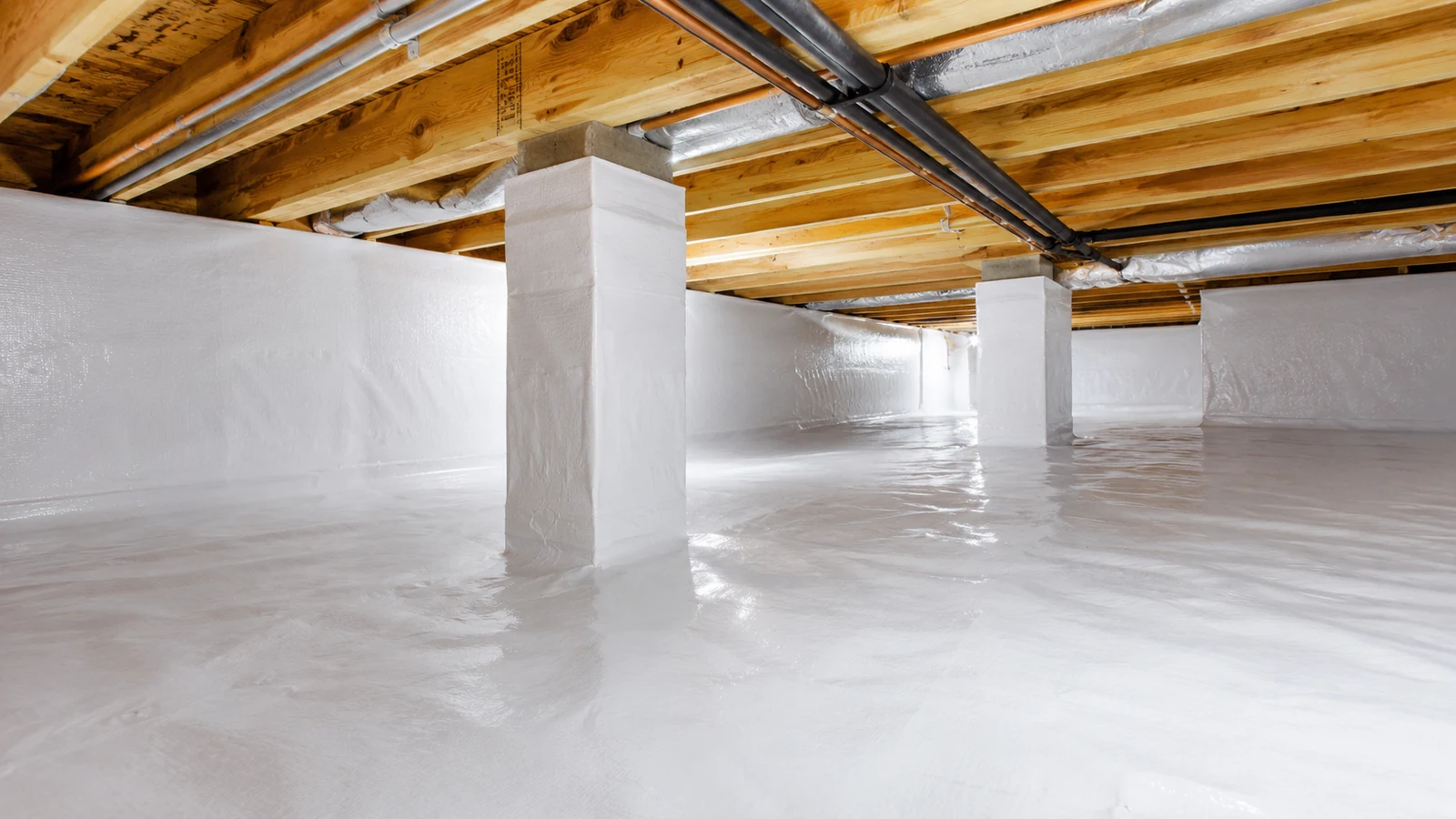
Two of the most common services homeowners in Savannah request are vapor barriers and encapsulation. These are related but not the same. A vapor barrier is a ground cover — typically a polyethylene sheeting material — laid across the exposed soil floor of the crawl space. It reduces ground moisture from migrating upward. Encapsulation goes further: it adds a thicker, reinforced liner across the floor and up the walls, often combined with sealing of vents and penetrations, creating a conditioned or semi-conditioned space. Encapsulation is generally more comprehensive and effective for Savannah's climate, but it is also a larger investment and may require additional work for drainage or humidity control. A local specialist can assess which approach makes sense for the home's current condition and construction.
Drainage and standing water concerns
Standing water in a crawl space is a more immediate problem than elevated humidity alone. Water can come from several sources: rainfall infiltration through foundation vents or poor exterior grading, groundwater seeping through the foundation, plumbing leaks from supply or drain lines running through the crawl space, and condensation accumulation. Addressing the source of the water before or alongside any liner or encapsulation work is critical — installing a vapor barrier over wet, actively draining soil provides limited benefit. Depending on the source, solutions may include interior drainage channels, sump pump installation, exterior grading correction, vent sealing, or combinations of these. A drainage assessment is typically part of a thorough crawl space inspection.
Insulation concerns in Savannah crawl spaces
Many Savannah-area homes have fiberglass batt insulation installed between the floor joists in the crawl space. In humid coastal climates, this insulation type is particularly vulnerable. When humidity levels are high, fiberglass batts absorb moisture, sag, and eventually fall away from the joists entirely. Wet insulation loses its thermal performance and can trap moisture against the wood framing it is meant to protect. If an inspection or homeowner observation reveals falling, wet, or compressed insulation, replacement is typically part of the repair scope. In encapsulated spaces, insulation is sometimes moved to the foundation walls rather than the joist cavities, changing the thermal boundary of the home. A specialist can advise on the appropriate insulation approach based on the overall repair plan.
What to have ready when you request an estimate
When you submit an estimate request, having some basic information available helps the specialist prepare. Useful details include: the city or neighborhood where the home is located, approximately when you first noticed a problem, what symptoms you are seeing (smell, visible moisture, fallen insulation, soft floors), whether the issue was identified on a home inspection report, any photos you have taken of the crawl space, the approximate age of the home, and whether there is existing vapor barrier or liner material in place. You do not need to have a diagnosis — that is what the inspection is for. The more context you provide, the more productive the initial conversation will be.
Important considerations before any repair
Crawl space repair decisions should be based on an in-person inspection, not estimates derived solely from photos or descriptions. Moisture sources can be difficult to identify without direct observation, and the scope of work can change significantly once a specialist has access to the space. Written estimates with clear scope descriptions protect homeowners. Verify any provider's Georgia license, applicable liability insurance, and a written scope of work before any contract is signed. Savannah Crawl Space Repair connects homeowners with local specialists and does not perform repairs directly — all work is carried out by independent service providers.