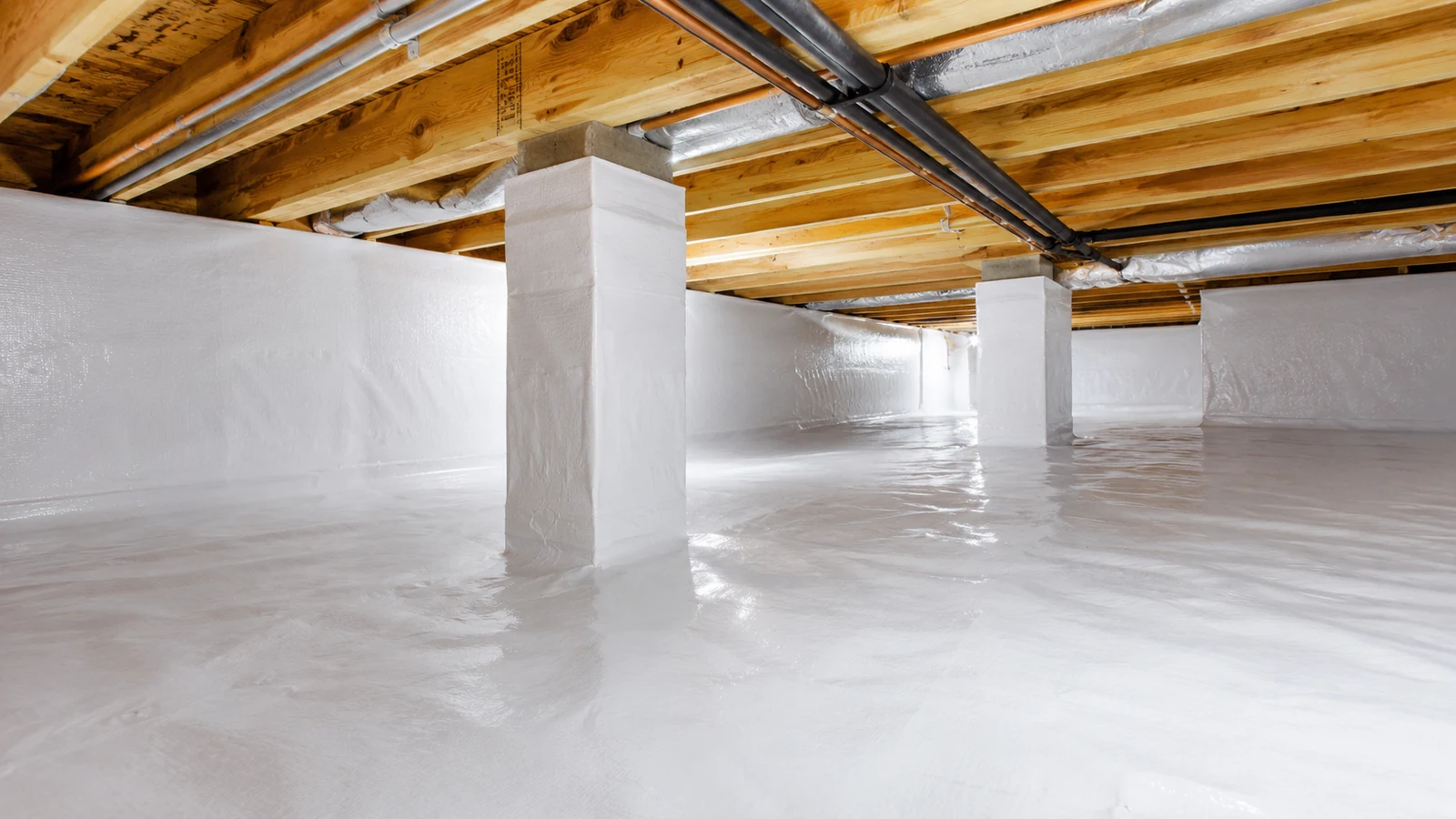
What crawl space encapsulation means
Encapsulation refers to the process of lining the interior of the crawl space with a continuous, reinforced barrier — typically a heavy-duty polyethylene or reinforced liner — that covers the ground floor and runs up the foundation walls. The goal is to separate the interior of the crawl space from the soil below and the outdoor environment outside. When combined with sealing of foundation vents, pipe penetrations, and access doors, the crawl space becomes a semi-conditioned or conditioned space that is more isolated from outdoor humidity and ground moisture. In Savannah's climate, where outdoor humidity regularly exceeds 70 percent for extended periods, this isolation can significantly reduce the moisture load in the crawl space and in the living areas above.
How encapsulation differs from a standard vapor barrier
A vapor barrier is a ground-only cover — typically a 6-mil or heavier polyethylene sheet laid across the soil floor of the crawl space. It provides a meaningful reduction in ground moisture vapor entering the space, but it does not seal the walls, vents, or penetrations. Encapsulation goes further. A full encapsulation system typically involves a thicker liner material (often 12-mil to 20-mil or higher), coverage up the walls to the sill plate, sealing of all foundation vents and exterior openings, and integration with a dehumidifier to maintain acceptable humidity levels in the now-sealed space. The distinction matters because in a humid coastal climate like Savannah's, a ground-only vapor barrier may not be sufficient to manage total moisture if significant humidity is entering through vents or wall penetrations.
When encapsulation is typically recommended
Encapsulation is generally recommended when a crawl space has persistent moisture problems that have not been resolved by simpler measures, when existing vapor barriers are inadequate for the conditions present, when a homeowner wants a comprehensive long-term moisture solution, or when a home inspection or specialist assessment identifies conditions that indicate encapsulation as the appropriate scope. Homes in Savannah's older neighborhoods — the Victorian District, Thomas Square, Ardsley Park, Midtown, and others — often have crawl spaces that were built without modern moisture management and can benefit significantly from encapsulation. Newer homes in Pooler, Richmond Hill, and surrounding communities may also require encapsulation depending on how the original crawl space was constructed.
Drainage conditions and encapsulation
Encapsulation works best when the crawl space does not have active water intrusion — meaning liquid water entering from groundwater, surface runoff, or plumbing leaks. Installing a liner over a wet or actively draining crawl space without addressing the water source first is likely to result in problems. A thorough pre-encapsulation inspection should assess whether standing water is present, where it comes from, and whether drainage work is needed before or as part of the encapsulation scope. Some encapsulation projects include interior drainage channels and a sump pump alongside the liner installation to handle water that may enter during heavy rain events. Your local specialist can assess drainage conditions during the estimate visit.
Dehumidifier integration
When a crawl space is encapsulated and vents are sealed, the space is no longer exchanging air with the outdoors in the same way. This is intentional — it reduces the moisture load from humid outdoor air. However, some residual humidity can remain from other sources, and a sealed space without active humidity control can still develop elevated humidity over time. For this reason, most comprehensive encapsulation projects include or recommend a crawl space dehumidifier. Crawl space dehumidifiers are designed to operate in low-clearance, unheated spaces and to maintain target humidity levels — typically 50 to 55 percent relative humidity or lower. The appropriate unit size depends on the square footage and conditions of the crawl space. A specialist can recommend sizing as part of the estimate.
Liner materials and thickness
Encapsulation liners vary by material composition, thickness, and reinforcement. Thicker liners are generally more durable and puncture-resistant, which matters in crawl spaces where the liner may be walked on during maintenance or HVAC work. Common thicknesses range from 10-mil to 20-mil, with some premium systems using even heavier material. Reinforced liners include a woven fabric layer or scrim to add tear resistance. The liner should extend up the foundation walls and be mechanically fastened and sealed at the top. The choice of liner should be part of the conversation with the specialist providing the estimate, and the scope should specify the material, thickness, and installation method.
What to ask when requesting an encapsulation estimate
When speaking with a specialist about crawl space encapsulation, useful questions include: What liner material and thickness is being proposed, and why? Does the estimate include drainage assessment and any drainage work if needed? Will vents and penetrations be sealed as part of the scope? Is a dehumidifier included or recommended separately? What is the warranty on the liner material and on the installation labor? How will the specialist handle existing conditions such as old liner material, fallen insulation, or minor plumbing issues discovered during the work? A detailed written estimate that specifies each element of the scope allows for clear comparison across estimates.
Next steps
To request an encapsulation estimate, use the form on this site to describe your situation — your city, what you are seeing in the crawl space, whether you have had a recent inspection, and any relevant details about the home. A local specialist will follow up to schedule an assessment. Encapsulation is a significant investment, and the estimate process should begin with a thorough in-person inspection. All work is performed by independent local service providers. Savannah Crawl Space Repair is an estimate-connection service, not a contractor.