Why crawl space humidity is a persistent problem in Savannah
Savannah's coastal climate produces some of the highest sustained humidity levels in the continental United States. Summer months routinely bring outdoor relative humidity above 80 percent, and even the cooler winter months rarely produce the low-humidity conditions that allow crawl spaces to dry naturally. Foundation vents — designed for older construction to provide ventilation — allow this humid outdoor air to enter the crawl space continuously. When warm, moisture-laden outdoor air enters and contacts cooler surfaces inside the crawl space, condensation forms on wood framing, pipes, and insulation. Over time, this moisture accumulation creates conditions associated with wood degradation, insulation failure, and odors. A dehumidifier that actively removes moisture from the crawl space air can interrupt this cycle.
Crawl space dehumidifiers versus household dehumidifiers
Standard household dehumidifiers are not designed for crawl space use. They require manual emptying of collection buckets, are not rated to operate efficiently at low temperatures, and may not function reliably in the low-clearance, unheated environment of a typical crawl space. Crawl space dehumidifiers are purpose-built for these conditions. They are designed to drain continuously through a gravity drain line or condensate pump rather than relying on a collection bucket. They are rated to operate at lower temperatures than household units and are built for continuous operation without the daily attention a household unit would require. Most crawl space dehumidifiers also include a hygrostat — a built-in controller that monitors humidity and activates the unit when levels rise above the target setting.
Sizing a dehumidifier for your crawl space
Dehumidifier sizing is one of the most important factors in system effectiveness. An undersized unit will run continuously without reaching target humidity levels, wasting energy and wearing out the equipment prematurely. An oversized unit may be more expensive than necessary and may short-cycle, which also reduces efficiency. The primary factors in sizing are the square footage of the crawl space, the current humidity conditions, whether the space is encapsulated or vented, whether significant water intrusion occurs during rain events, and the climate zone. In Savannah's climate, crawl space dehumidifiers need to be adequately sized for high-load conditions during summer. A specialist who inspects the space can recommend appropriate sizing based on measured or estimated conditions.
Dehumidifier placement and drainage
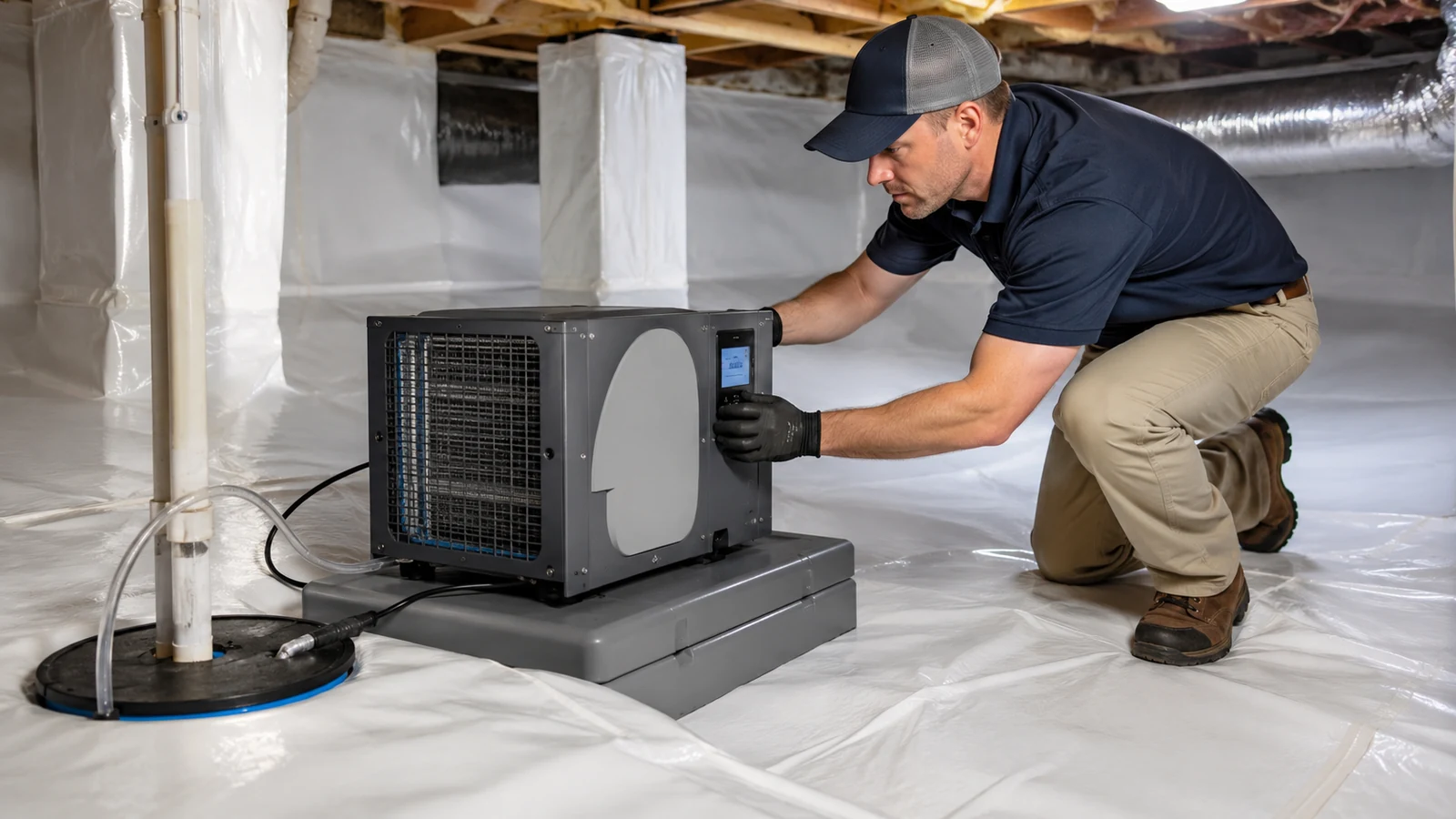
Placement within the crawl space affects how effectively a dehumidifier manages humidity throughout the space. Ideally, the unit should be positioned to draw air from the areas with the highest humidity or the most challenging conditions. Drainage is a critical installation consideration — the unit must be able to drain condensate continuously. Options include a gravity drain line to a suitable exterior or interior drainage point, or a condensate pump that lifts the water to a drain or exterior. The drain line must not be blocked or restricted, and the system should be checked periodically to ensure drainage is functioning correctly. Blocked drainage is one of the most common causes of dehumidifier performance issues.
Integration with vapor barrier and encapsulation systems
A crawl space dehumidifier works best when paired with an appropriate moisture barrier system. In an encapsulated crawl space — where the ground and walls are lined and foundation vents are sealed — the dehumidifier manages residual humidity in a sealed or semi-sealed environment. Without encapsulation, a dehumidifier in a vented crawl space is essentially working against the continuous influx of humid outdoor air through the vents, which dramatically reduces its effectiveness. For most Savannah homes, dehumidifier installation makes the most sense as part of a comprehensive system that includes vapor barrier or encapsulation work to reduce the total moisture load the unit must manage.
Maintenance requirements
Crawl space dehumidifiers require periodic maintenance to function properly over their service life. Most units have a filter that needs to be cleaned or replaced on a regular schedule — typically every three to six months, though more frequently in dusty crawl spaces. The drainage system should be checked periodically to ensure the drain line or condensate pump is clear and functioning. The coils should be inspected for dirt accumulation, which can reduce efficiency. Some manufacturers recommend annual professional servicing. When requesting a dehumidifier installation estimate, ask the specialist about recommended maintenance intervals and what the process is for servicing the specific unit being proposed.
Monitoring humidity levels
After a dehumidifier is installed, it is useful to monitor crawl space humidity levels to confirm the system is maintaining the target range. Most crawl space dehumidifiers include a built-in digital display of current humidity, and many allow setting a target humidity level. Standalone hygrometers — inexpensive humidity monitors — can also be placed in the crawl space and checked periodically or during inspections. For homeowners who want remote monitoring without entering the crawl space, some systems include wireless sensors that can report conditions to a phone or smart home system. Establishing a baseline and verifying that the dehumidifier is maintaining target humidity over time is the best way to confirm the system is functioning as expected.
What to include in your dehumidifier estimate request
When requesting a crawl space dehumidifier estimate, useful details include: the approximate square footage of your home or crawl space, whether the crawl space is currently encapsulated or vented, what moisture or humidity issues have been observed, whether you have a prior humidity reading from the space, and whether you are requesting the dehumidifier as a standalone installation or as part of a broader moisture-control project. If an inspection has already been done, sharing the findings will help the specialist prepare. The estimate should specify the unit proposed, its rated capacity, the drainage plan, and the installation method.