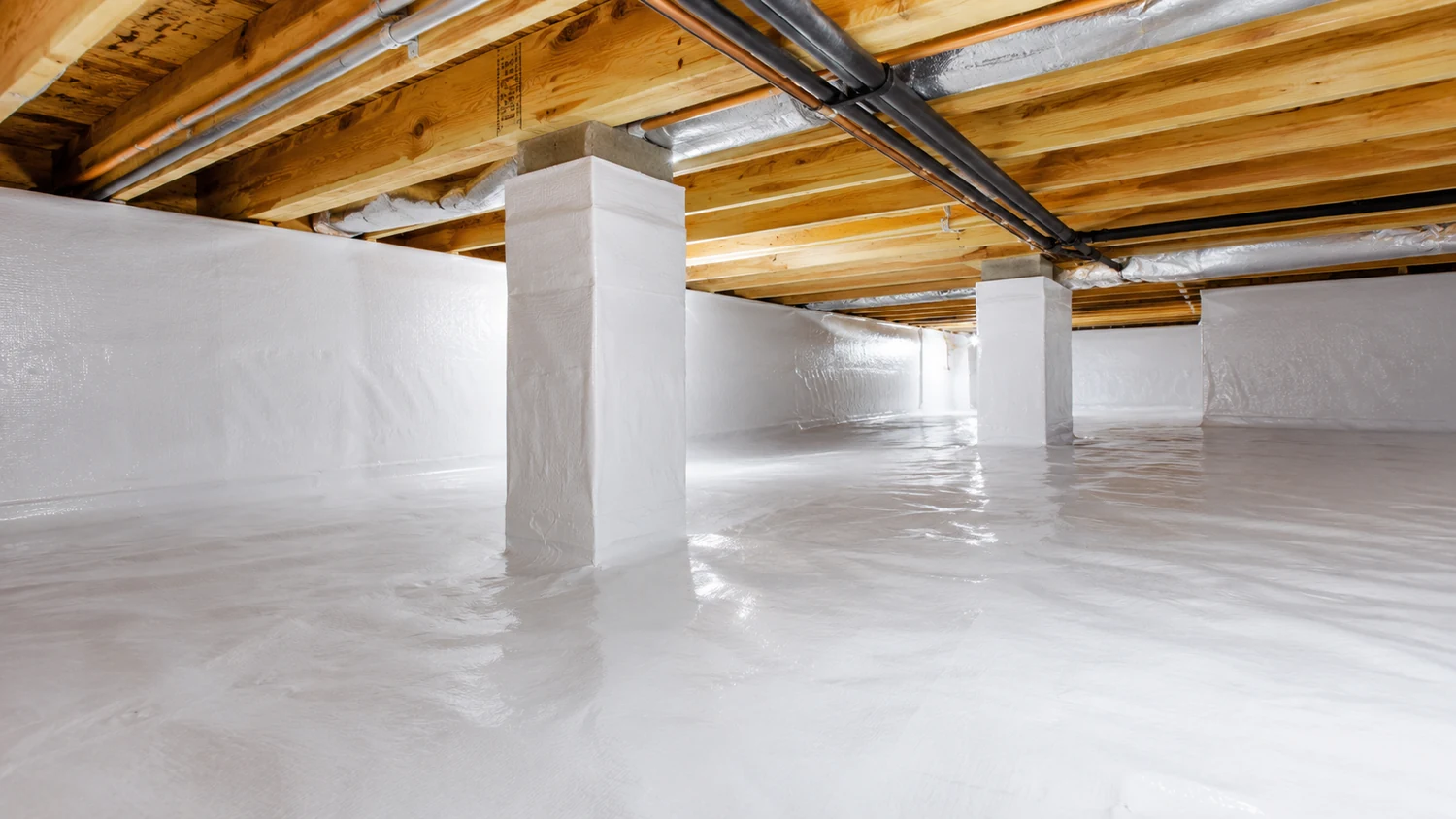
What a vapor barrier does
A vapor barrier is a plastic sheeting material laid across the soil floor of a crawl space to reduce the amount of moisture vapor that rises from the ground into the space above. Soil naturally contains moisture, and in Savannah's humid coastal environment, that moisture is almost always present. Without a ground cover, moisture vapor migrates freely from the soil into the crawl space air, where it can condense on cooler surfaces like wood framing, pipes, and insulation. Over time, this persistent moisture exposure degrades materials and creates conditions associated with odors and structural damage. A vapor barrier interrupts that upward migration at the source — the soil surface.
Vapor barrier materials and thickness
Vapor barriers vary significantly in material type, thickness, and quality. The most common materials are polyethylene sheeting, which comes in a range of thicknesses measured in mils. A 6-mil barrier is the minimum commonly referenced in older guidelines and building codes, but many specialists and current best practices recommend heavier material — 10-mil, 12-mil, or 20-mil — particularly in humid climates like Savannah's. Thicker material is more durable, more resistant to puncture during installation and future crawl space access, and less likely to tear over time. Reinforced liners that incorporate a woven or fabric layer add additional puncture resistance. The specialist you hire should be able to explain the material they propose and why it is appropriate for your crawl space conditions.
Proper installation matters
A vapor barrier is only as effective as its installation. Common installation issues that reduce effectiveness include: inadequate seam overlap (seams should overlap by at least 12 inches and ideally be taped or sealed), failure to extend the barrier to the foundation walls, gaps around pillars, posts, or pipes that allow soil to remain exposed, and barrier material that is laid loosely rather than fitted to the perimeter. A properly installed vapor barrier should cover all exposed soil, with seams overlapped and sealed, edges attached to the foundation walls, and penetrations sealed around pipes and supports. Some installations also include securing the barrier with gravel or fasteners to prevent movement if the crawl space is accessed for maintenance.
When a vapor barrier may be sufficient
A vapor barrier alone may be an appropriate moisture-management solution when the primary moisture source is ground vapor rather than outdoor air humidity, when the crawl space does not have significant active water intrusion or drainage issues, when the home's crawl space venting is functioning as intended and outdoor humidity is not a dominant factor, and when the existing conditions do not include significant wood damage or insulation degradation that would require additional repair. In practice, many Savannah crawl spaces benefit from more than just a ground barrier given the climate, but a quality vapor barrier installation is still a meaningful improvement over an uncovered exposed-soil crawl space.
When to consider encapsulation instead
If a vapor barrier assessment reveals that outdoor air humidity through foundation vents is a significant moisture contributor, if the crawl space has persistent odor or moisture issues that have not improved with a previous barrier, or if a specialist recommends a more comprehensive approach, full encapsulation — which adds wall coverage, vent sealing, and dehumidification to the ground liner — may be the more appropriate solution. Encapsulation is a larger investment but addresses a broader range of moisture entry points. A specialist who inspects the crawl space can advise whether a vapor barrier is likely to be sufficient for the conditions present or whether encapsulation is warranted.
Vapor barriers and drainage
Installing a vapor barrier over soil that has an active water intrusion problem is not a long-term solution. If water regularly enters the crawl space from surface runoff, groundwater, or poor drainage, the water will pool under or around the barrier rather than being managed. For homes with standing water or consistently wet soil, drainage work — which may include interior drainage channels, a sump pump, or exterior grading corrections — should be assessed and addressed before or alongside vapor barrier installation. An inspection that evaluates drainage conditions is important for any home where water intrusion is a concern.
Existing vapor barriers and replacement
Many Savannah homes already have some form of vapor barrier in place, particularly if the home was built after the 1970s or has had prior crawl space work. Existing barriers can degrade over time — tearing, shifting, developing gaps, or simply wearing out after years of use. During an inspection, the specialist will typically assess whether the existing barrier is in adequate condition or whether it should be replaced. Replacement involves removing the old material, inspecting the soil and framing conditions underneath, and installing new liner. In some cases, existing barriers can be partially repaired or supplemented rather than fully replaced, depending on the condition.
What to include in your estimate request
When requesting a vapor barrier estimate, helpful information includes: the approximate square footage of your home or the known size of the crawl space, whether any barrier is currently in place and in what condition, whether you have noticed standing water or wet soil in the crawl space, the age of the home, and any specific areas where you have noticed moisture, odors, or insulation issues. A specialist will visit to assess conditions before providing a final written estimate. Request that the estimate specify the material proposed, the mil thickness, how seams and perimeter attachment will be handled, and what the process is for removing any existing material.