Why crawl space insulation fails in Savannah
Fiberglass batt insulation is the most common type found in the floor joist cavities of older Savannah homes. It is installed between the joists and held in place by friction and, in some cases, by wire or mesh supports. In a dry climate, this works reasonably well. In Savannah's coastal humid environment, it is consistently challenged. When crawl space humidity is elevated — as it frequently is in vented crawl spaces throughout the year — fiberglass absorbs moisture. Wet insulation is heavier than dry insulation, and it eventually overcomes the friction holding it in place and drops to the crawl space floor. Wet fiberglass also provides dramatically less thermal performance than dry insulation and can trap moisture against the wood joist it is meant to protect, creating conditions that accelerate wood degradation.
Recognizing damaged crawl space insulation
Homeowners typically discover crawl space insulation problems in one of three ways. The first is a visual inspection of the crawl space itself — either during routine maintenance, before a real estate transaction, or following an HVAC or plumbing service call. A direct look at the crawl space will show whether insulation is still in place between the joists or has fallen to the floor. The second indicator is a home inspection report that flags insulation condition as part of a pre-sale or purchase inspection. The third is indirect evidence above the crawl space — floors that feel colder than expected in winter, slightly elevated heating costs, or soft spots in the floor that prompt investigation. If you have reason to suspect insulation problems, a crawl space inspection is the appropriate next step.
Insulation replacement options
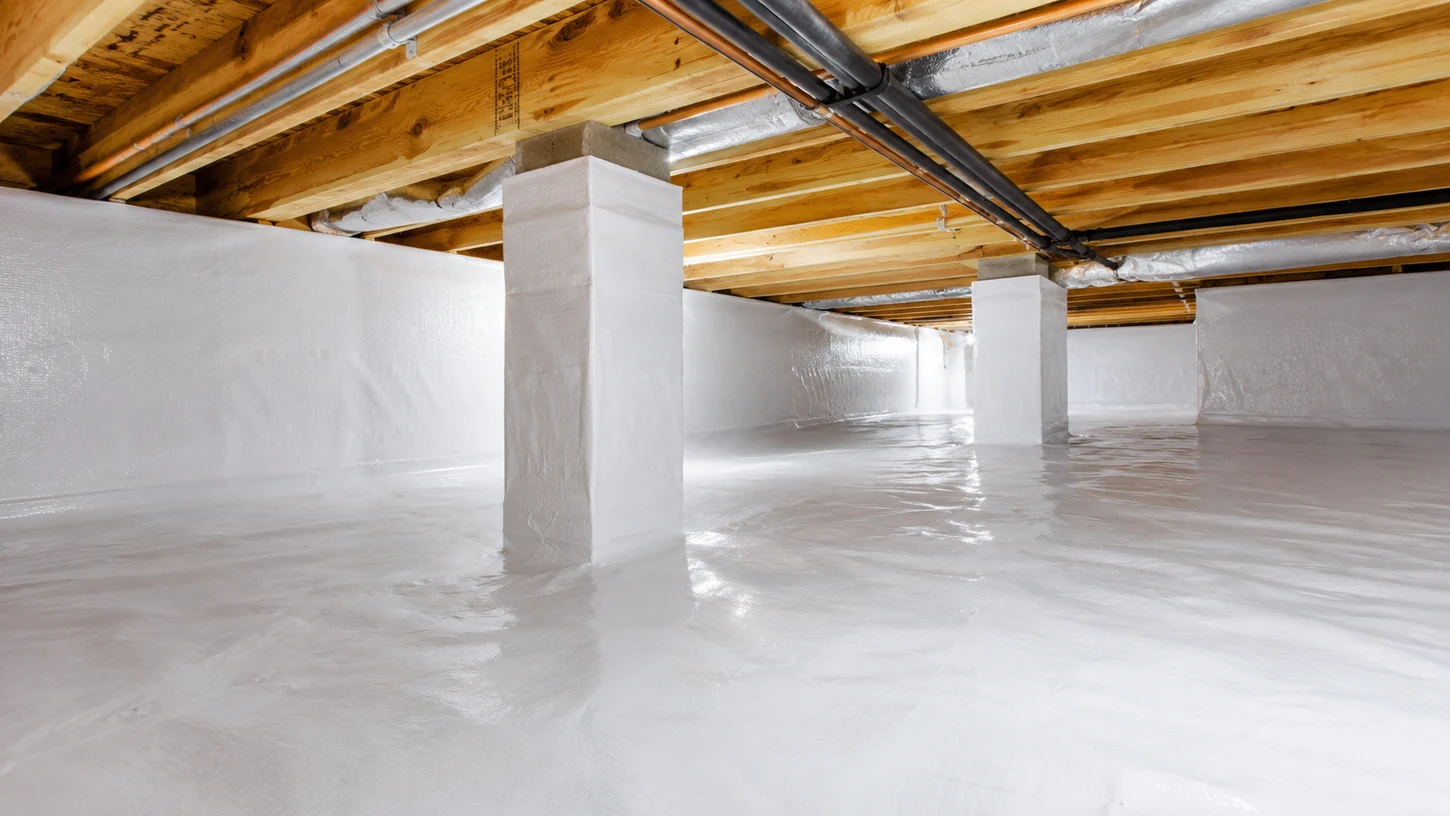
When crawl space insulation needs to be replaced, the approach depends on the overall moisture-management strategy for the space. In a conventional vented crawl space, the traditional approach is to reinstall fiberglass batt insulation between the floor joists. However, if the moisture conditions that caused the previous insulation to fail are not addressed, replacement insulation will likely experience the same problems over time. For homes that are moving to full encapsulation, insulation placement often changes entirely — rather than insulating the floor cavities, insulation is applied to the foundation walls, and the crawl space becomes part of the semi-conditioned building envelope. A specialist can advise on the approach that makes sense for the current condition and planned moisture-management strategy.
Addressing moisture before replacing insulation
Replacing insulation in a crawl space that still has active moisture problems is generally not the most effective approach. New insulation installed into elevated humidity conditions will be exposed to the same moisture that damaged the previous material. Before or alongside insulation replacement, the underlying moisture conditions should be assessed and addressed — which may mean installing or improving a vapor barrier, improving drainage, adding a dehumidifier, or pursuing full encapsulation. The insulation replacement is best positioned as one element of a broader moisture-management scope rather than a standalone repair.
Joist and subfloor condition assessment
When fallen or damaged insulation is removed, the condition of the floor joists and subfloor above can be assessed directly. Prolonged moisture exposure from wet insulation in contact with wood can result in darkening of the wood, soft spots, or in more severe cases, structural degradation that requires repair beyond insulation replacement. The specialist removing the insulation should inspect the exposed joists and subfloor material and advise on any findings. If structural concerns are identified, a structural engineer or contractor review may be appropriate before completing the crawl space work.
Insulation and home inspection reports
Crawl space insulation condition is frequently noted on home inspection reports during real estate transactions in Savannah. Inspectors commonly flag fallen, wet, or missing insulation, and buyers or sellers may be asked to address the issue as a condition of the transaction. For sellers, understanding what is involved in insulation replacement — and whether the insulation condition is part of a larger moisture issue — is important for scoping the repair accurately. For buyers, a crawl space inspection that includes moisture assessment alongside insulation review helps establish the full scope of what may need to be addressed. An estimate request that references a home inspection report is a common starting point for crawl space insulation work in Savannah.
What to expect from an insulation estimate
A crawl space insulation estimate should include a description of the insulation being proposed — material type, R-value, and placement — along with the process for removing existing material if replacement is needed. The estimate should also address how the work relates to the overall moisture conditions in the crawl space. If the specialist recommends addressing moisture before or alongside insulation work, that recommendation should be clearly explained and scoped separately. Ask whether the estimate includes debris removal of fallen insulation, and what the process is for handling any wood condition concerns discovered during the work.
Coordinating insulation with other crawl space work
Crawl space insulation replacement is most effective when coordinated with the broader moisture-management plan for the space. If encapsulation is planned, the insulation work may be part of that same project scope. If a vapor barrier is being improved, insulation replacement can be included. Coordinating these elements with a single specialist who understands the full picture of the crawl space conditions is generally more efficient than addressing insulation separately from moisture work and then revisiting the space again later.