
Do not replace symptoms only
If insulation is falling because of moisture, replacing insulation without addressing moisture can miss the real issue.
Falling or damp crawl-space insulation may be a symptom of moisture. Request an estimate that reviews the insulation and the moisture source before replacement.
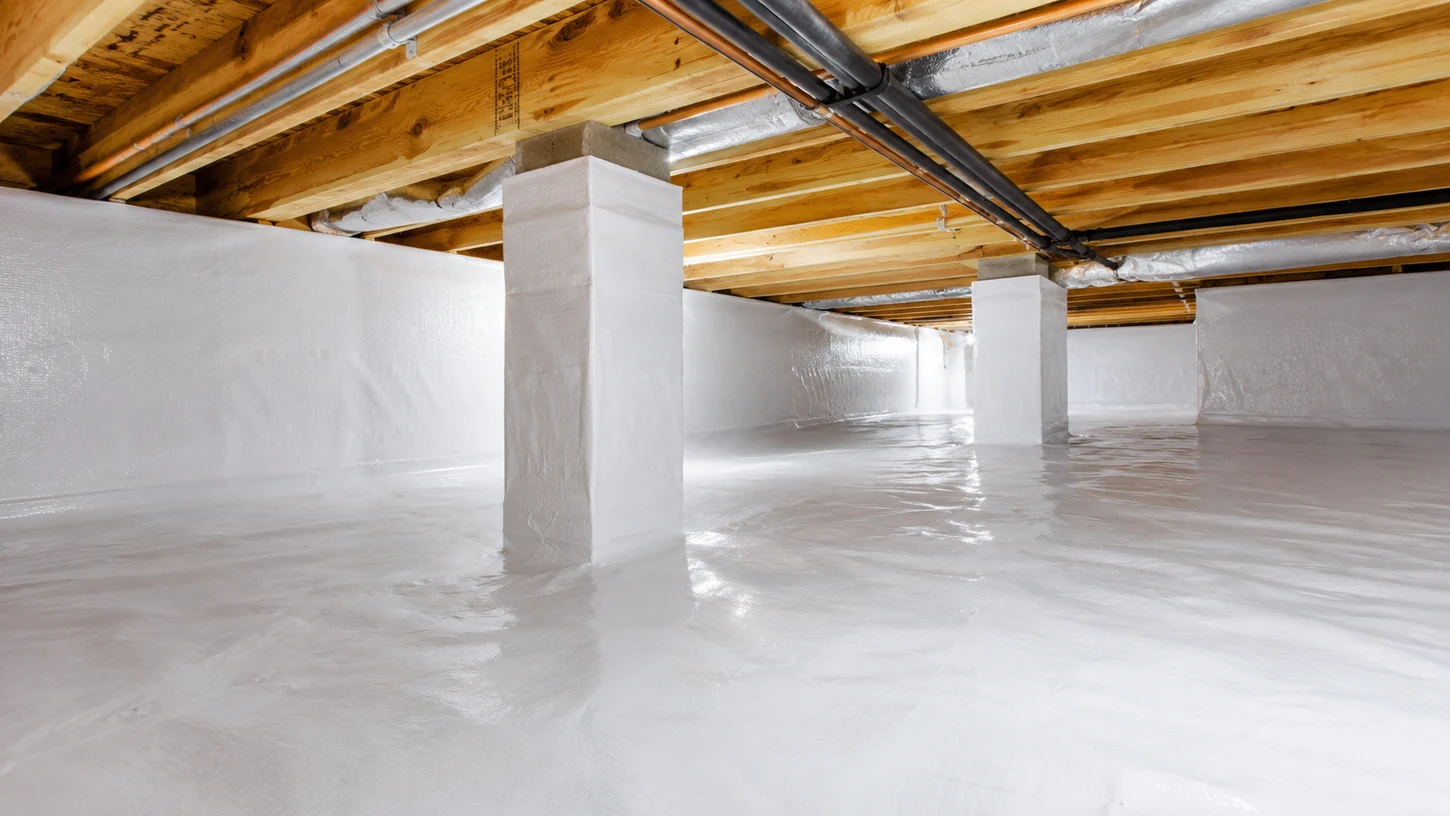
If insulation is falling because of moisture, replacing insulation without addressing moisture can miss the real issue.
Insulation pages should link naturally to vapor barriers, encapsulation, drainage, and dehumidifiers.
Falling insulation is often found during home inspections, making this a good real-estate-intent page.
In the Savannah, Georgia climate, exposed fiberglass batt insulation under a raised floor rarely fails on its own. Coastal humidity keeps crawl-space air damp for much of the year, and when moisture-laden air moves through open foundation vents or evaporates off bare soil, the paper facing and fibers of the batts absorb water vapor. Wet insulation becomes heavy and starts to sag, stretching the wire supports or staples until whole sections drop onto the crawl-space floor. Once insulation is lying against damp soil it stops performing thermally and can hold moisture against the subfloor and floor joists, which is the opposite of what it was installed to do. In older raised-floor homes across Savannah, Pooler, Richmond Hill, Garden City, Port Wentworth, Thunderbolt, and Tybee Island, fallen insulation is usually a symptom of a humidity or moisture-source problem, not the root problem itself. That is why an estimate should address both the insulation and the conditions that caused it to fail.
If the crawl space is dry, has a continuous ground vapor barrier in good condition, sealed or managed vents, and shows no staining on piers or subfloor sheathing, a targeted insulation repair may be reasonable. The warning sign in coastal Georgia is when fallen insulation appears together with musty odors, condensation on ductwork or plumbing, cupping floors indoors, or visible soil moisture. In those cases, simply re-hanging new batts usually reproduces the same failure within a few humid seasons. A practical inspection should document where insulation has fallen, whether it is damp or moldy, whether the vapor barrier is intact, and whether vents and access doors are allowing humid outside air into the space. Photograph the problem areas before the visit if you can, especially sections where insulation has dropped, because that helps the provider price removal and disposal rather than just installation. Written scope should state clearly whether the job includes debris removal, new batts, hanging system upgrades, and any moisture-control work.
Providers working in Chatham County frequently pair insulation repair with one or more moisture-control measures. A fitted ground vapor barrier reduces the evaporation that loads crawl-space air with moisture, and heavier encapsulated liners on floors and walls go further for homes with chronic humidity. Sealed foundation vents and a conditioned or dehumidified crawl space change the environment the insulation lives in, so the new material stays dry and stays in place. Some homes around Richmond Hill and Pooler with drainage concerns may also need grading or drainage attention before insulation work makes sense. The estimate request process on this site routes your description, city or neighborhood, and photos to providers who can inspect and present written options, so you can compare a repair-only scope against a combined insulation and encapsulation plan instead of guessing from national averages.
Possible causes include moisture, age, pests, poor installation, or material damage. Inspection is needed.
The order depends on conditions and scope. A provider should review moisture, access, and materials.
Damp materials can contribute to odors, but the source should be inspected.
These are launch examples. Replace with real completed projects, dates, photos, and customer-approved details.