Why crawl space mold is a moisture problem
Mold in a crawl space is almost always a symptom of a moisture problem, not the root cause. Mold spores are everywhere — they only become a problem when humidity, water, and organic material like wood or insulation create the right conditions for growth. In Savannah's climate, crawl spaces without vapor barriers or humidity control create exactly those conditions. Treating the mold without fixing the moisture source means the mold will return.
What a crawl space mold assessment looks at
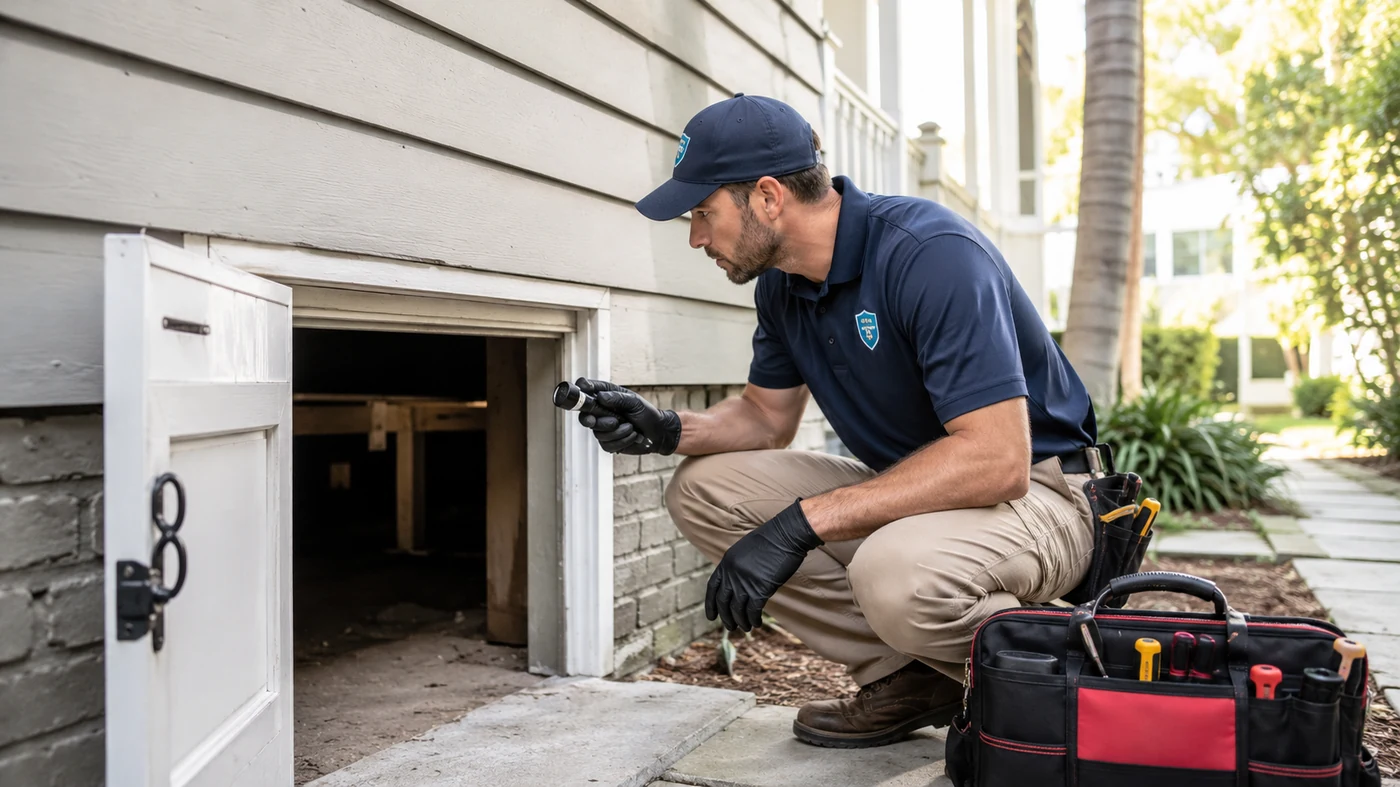
A provider assessing crawl space mold should document the affected areas, identify the moisture source — whether that's groundwater migration, condensation on ducts and joists, or water intrusion — and recommend a sequence of repairs. In most cases, that sequence involves addressing drainage first, then removing damaged insulation, treating affected wood, and finally encapsulating the space to prevent recurrence.
Savannah humidity and mold risk
Savannah's average annual relative humidity routinely exceeds 70%, and crawl spaces without mechanical humidity control can reach levels well above 80% during summer months. At those levels, mold growth on wood is not a question of if — it is a question of when. Crawl space encapsulation with a dehumidifier is the most effective way to keep humidity below the 55% threshold where mold growth is significantly reduced.
What is included in a crawl space mold estimate
A complete mold remediation and encapsulation estimate may include: assessment documentation, removal of mold-affected insulation, antimicrobial wood treatment, optional air scrubbing, moisture source correction, vapor barrier or full encapsulation installation, and dehumidifier placement. Providers should explain which steps are required versus optional, and should not promise health outcomes from mold remediation.