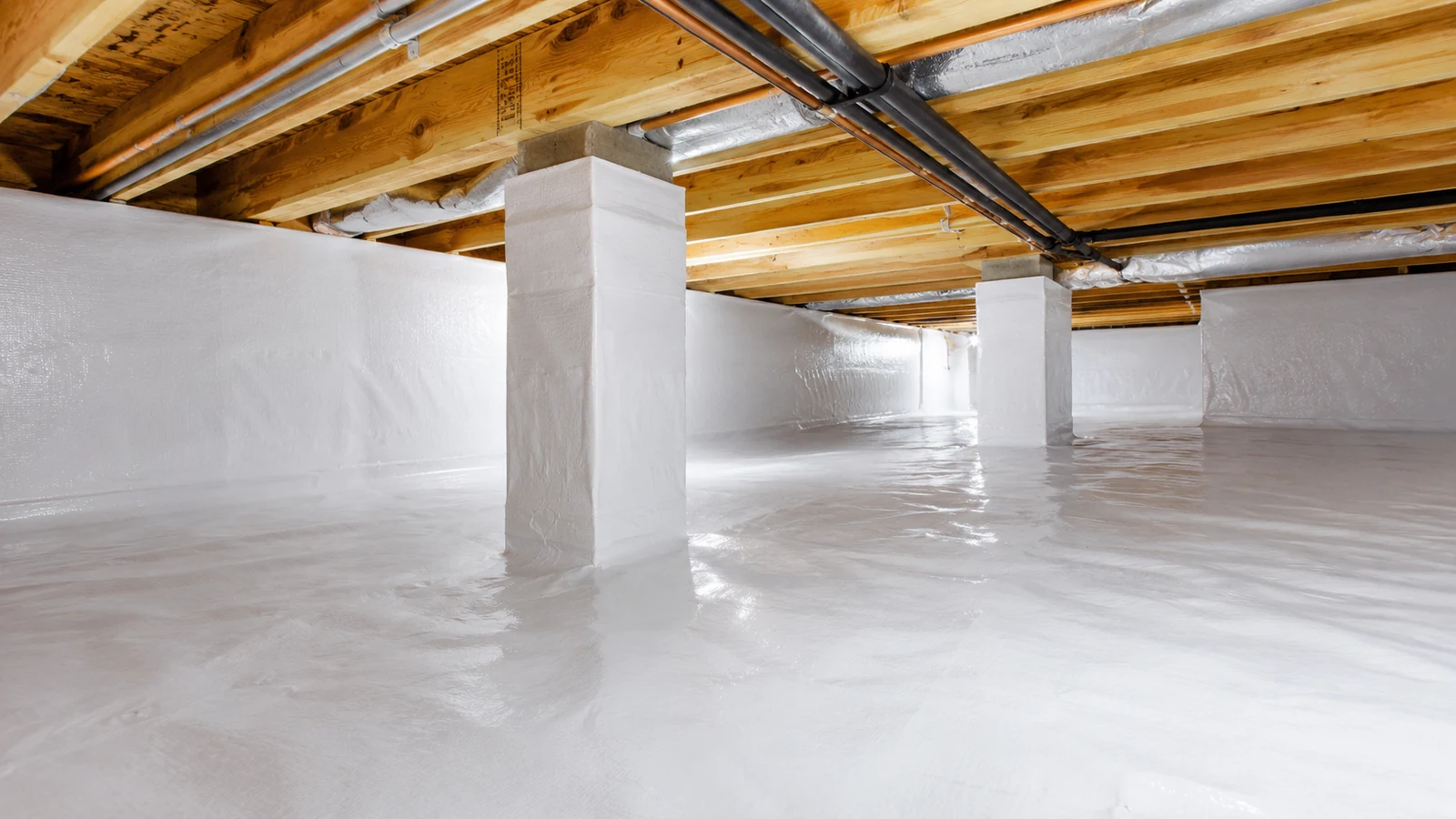
Crawl space conditions in Pooler
Pooler sits in the western portion of Chatham County, roughly 12 miles from the Savannah coast. While it does not face the direct tidal influences that communities like Tybee Island or Thunderbolt contend with, it is fully within Savannah's coastal humidity zone. Homes in Pooler — whether older construction near Pooler Parkway or newer subdivisions off I-95 — experience the same elevated humidity and seasonal rain patterns as the rest of the metro area. Crawl spaces under single-story homes throughout Pooler regularly see conditions that can cause vapor barriers to age and fail, insulation to sag and fall, and humidity to accumulate in ways that affect the living areas above.
Newer construction and crawl space moisture
Many homeowners in Pooler's newer subdivisions assume that a recently built home does not have crawl space moisture concerns. This is not always the case. While newer homes are built under current codes that require vapor barriers, the quality of installation varies, and coastal Georgia's humidity consistently challenges even well-installed systems. Homes with crawl spaces that have foundation vents open to outdoor air are continuously exposed to Pooler's humid summers. Encapsulation — which seals the space and manages humidity actively — provides more reliable protection than a standard ground barrier alone in this climate.
Encapsulation versus vapor barrier in Pooler
For Pooler homeowners deciding between a vapor barrier and full encapsulation, the choice often comes down to current conditions and long-term goals. A vapor barrier covering the exposed soil addresses ground moisture but does not manage the outdoor humid air that enters through vents. Encapsulation goes further — it adds wall coverage, seals vents and penetrations, and when combined with a crawl space dehumidifier, creates a managed environment that maintains target humidity year-round. In Chatham County's climate, many specialists recommend encapsulation for long-term effectiveness, particularly for homes with repeated moisture concerns.
What to expect from an estimate in Pooler
A crawl space inspection in a Pooler home typically begins with the specialist accessing the crawl space through the access hatch and assessing the soil condition, any existing vapor barrier, the insulation condition, wood framing appearance, ventilation configuration, and whether any drainage concerns are present. The written estimate will specify what is being proposed, what materials will be used, and the project scope. Request estimates from specialists who are familiar with Pooler-area homes and who provide written documentation of scope before any work begins.