
Primary long-tail keyword: vapor barrier vs crawl space encapsulation Savannah GA
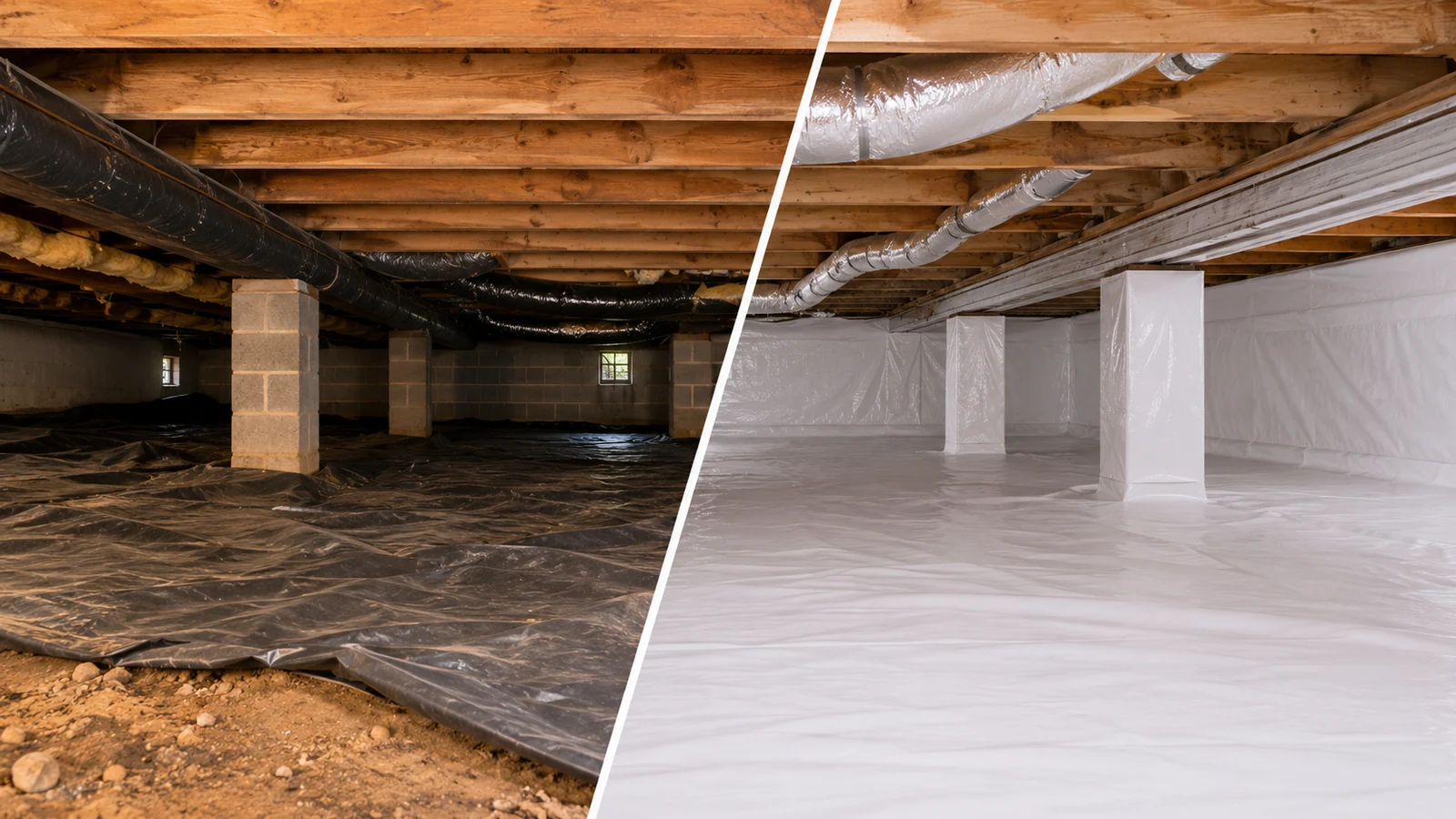
Many Savannah homeowners start with one simple question: do I need a crawl space vapor barrier or full encapsulation? The two services are related, but they are not the same. A vapor barrier usually addresses ground moisture. Encapsulation is a more complete system that may include sealing, wall coverage, drainage planning, and humidity control. Understanding the difference helps you avoid paying for too little or overbuying before the crawl space is properly inspected.
What a crawl space vapor barrier does
A vapor barrier is designed to reduce moisture movement from the ground into the crawl space. In many crawl spaces, exposed soil is one of the biggest moisture sources. Covering that soil with a properly installed barrier can be a useful first step.
However, a vapor barrier is not a complete fix for every crawl-space problem. If water is actively entering the crawl space, the barrier alone may not solve the cause. If humidity enters through open vents, gaps, or poorly sealed areas, the crawl space may still feel damp. If insulation is already damaged, that may require separate work.
The simplest way to think about it is this: a vapor barrier separates the crawl space from ground moisture, but it may not control all moisture sources.
- Exposed dirt crawl spaces
- Ground moisture
- Simple moisture separation
- Lower-scope projects
- Encapsulation preparation
What crawl space encapsulation usually includes
Encapsulation is a broader moisture-control approach. Depending on the provider and the crawl-space condition, encapsulation may include a heavy-duty liner on the floor, liner on foundation walls, sealed seams, sealed vents, covered piers, air sealing around penetrations, improved access door sealing, dehumidifier planning, drainage work, and insulation strategy.
Because encapsulation can include many pieces, it usually costs more than a basic vapor barrier. But it may also be the better long-term option for a crawl space with persistent humidity, musty odor, exposed ground, damaged insulation, and moisture that returns after rain.
The key is scope clarity. Ask every provider exactly what their encapsulation includes. Do not assume the word means the same thing in every estimate.
- Floor liner
- Wall coverage
- Sealed vents
- Sealed seams
- Dehumidifier options
- Drainage review
When a vapor barrier may be enough
A vapor barrier may be appropriate when the crawl space is relatively clean, access is manageable, there is no active standing water, and the primary concern is exposed soil or mild ground moisture. It may also be used as a budget-conscious first phase before a larger encapsulation project.
Homeowners sometimes choose vapor barrier installation when a home inspection report notes missing or damaged ground cover. In those situations, the provider should still check for water entry, humidity, and damaged materials before recommending the simplest option.
If the only issue is exposed dirt and the crawl space is otherwise dry, a properly installed vapor barrier may be a practical solution.
- Exposed soil
- No active water
- Limited budget
- Inspection report notes ground cover
- Cleaner crawl space conditions
When encapsulation may make more sense
Encapsulation may make more sense when the crawl space has ongoing humidity, musty odors, condensation, open vents, damaged insulation, or a need for long-term moisture management. It may also be a better fit when homeowners want a cleaner, more controlled crawl-space environment.
In Savannah, humidity is an important factor. Even after ground moisture is addressed, humid outside air and crawl-space air movement can still matter. That is why some encapsulation projects include dehumidifiers or other humidity-control planning.
Encapsulation is not magic. It must be designed around the actual moisture source. A good provider should explain whether drainage is needed first and whether dehumidification is part of the plan.
- Musty odors
- High humidity
- Falling insulation
- Condensation
- Open vents
- Long-term moisture planning
Drainage should be considered before either option
If there is standing water under the home, the discussion should begin with drainage and water entry. Installing a vapor barrier or encapsulation system over active water problems may lead to disappointment.
Ask the provider where the water is coming from. It may be related to grading, gutters, downspouts, plumbing, groundwater, low spots, or storm runoff. The answer affects the project sequence.
A strong estimate will explain whether drainage is required, optional, or not needed based on what was observed.
- Water entry should be identified
- Grading and downspouts may matter
- Standing water may require drainage
- Encapsulation may come after drainage
How to compare quotes fairly
Do not compare a simple vapor barrier quote against a full encapsulation quote as if they are the same service. Put the estimates side by side and list what each one includes. Does it include cleanup? Wall liner? Vent sealing? Dehumidifier? Drainage? Insulation removal? Warranty? Access improvements?
The best quote is not always the cheapest. It is the quote that solves the right problem with a clear scope, honest limitations, and realistic expectations.
If a provider cannot explain the difference between vapor barrier and encapsulation, keep asking questions.
- Compare scope line by line
- Ask about exclusions
- Ask about moisture source
- Ask for photos
- Ask about warranty language
How the decision changes when there is standing water
The biggest mistake is treating every moisture problem like a liner problem. If water is actively entering the crawl space, the provider should review drainage first. A vapor barrier can separate the crawl space from ground moisture, but it does not stop water from flowing into the area. Full encapsulation can make the space cleaner and more controlled, but it should not be installed as a cover-up for unresolved water entry.
If you see puddles, wet soil, or water marks after rain, ask whether the provider recommends drainage before installing a liner. Ask whether gutters, downspouts, grading, exterior water flow, or plumbing need review. If the answer is vague, get another opinion before committing to a project.
How the decision changes when there is musty odor
Musty odor often leads homeowners to search for encapsulation, but odor does not identify the exact cause by itself. The smell could be related to exposed soil, wet insulation, high humidity, old debris, water entry, or microbial growth. A vapor barrier may help if exposed dirt is the main contributor. Encapsulation may make sense if the crawl space needs a more complete moisture-control system.
A dehumidifier may also become part of the conversation if humidity remains high after the crawl space is sealed. The right sequence depends on inspection. That is why odor-focused pages should push homeowners toward evaluation rather than promising a single fix.
Questions to ask when comparing vapor barrier and encapsulation quotes
- Is this quote for ground cover only or a complete encapsulation system?
- Will the walls and piers be covered?
- Will vents and penetrations be sealed?
- Will seams be taped or sealed?
- Is old insulation removal included?
- Is drainage needed before the liner is installed?
- Is a dehumidifier included or recommended?
- What material thickness is being used?
- What warranty applies to the liner and installation?
- What maintenance is required after installation?
Which option is better for real estate inspection issues?
If a home inspection report mentions missing vapor barrier, exposed soil, moisture, standing water, or damaged insulation, do not assume the cheapest fix is enough. The buyer, seller, agent, and provider should understand what the report actually says. Sometimes the report only notes that a vapor barrier is missing. Other times it points to water intrusion or damaged materials that require more review.
For inspection-related repairs, clarity is more important than sales language. The estimate should match the report, explain the visible conditions, and avoid making promises outside the provider’s scope. If the home is under contract, timing can matter, but rushing into the wrong repair can create problems later.
When to choose a phased approach
Some homeowners choose a phased approach. Phase one might include cleanup, drainage review, and a vapor barrier. Phase two might include wall coverage, vent sealing, dehumidifier installation, or insulation strategy. This can be helpful when budget is limited or when the provider needs to see how the crawl space responds after initial moisture control.
A phased approach should still be documented clearly. Ask what is being handled now, what remains unfinished, and what conditions would trigger the next phase. This prevents confusion and helps you plan future work.
Related pages to review
For broad repair help, visit crawl space repair in Savannah. If your concern is exposed dirt, review vapor barrier installation. If humidity is the issue, see humid crawl space help and crawl space dehumidifier options.
How Savannah humidity changes the comparison
In a drier market, a simple vapor barrier may solve a larger share of crawl-space moisture complaints. In Savannah, humidity can make the decision more complicated. A home can have a vapor barrier and still feel humid if outside air, open vents, or incomplete sealing continue to affect the crawl space. This does not mean every home needs full encapsulation, but it does mean humidity should be part of the inspection conversation.
Ask the provider whether they are addressing ground moisture, air moisture, or water entry. Those are different problems. A ground vapor barrier may help with soil moisture. Encapsulation may help create a more controlled environment. Dehumidification may help manage air humidity. Drainage may be needed if water is actively entering. The right solution depends on which of those problems is actually present.
Important note before you hire anyone
This guide is educational and designed to help Savannah-area homeowners prepare for an estimate. It is not mold testing, engineering advice, structural advice, medical advice, legal advice, or a promise of cost, savings, health improvement, or project outcome. Crawl-space recommendations should come from a qualified provider after inspecting the home, access, drainage, insulation, moisture source, and existing materials.