Crawl space humidity is one of the most common concerns Savannah homeowners deal with — and one of the most misunderstood. High readings don't always mean you have a problem right now. But they do mean the conditions for problems are present. Here is what you need to know.
What is a safe crawl space humidity level?
The generally recommended threshold for crawl space relative humidity is 55% or below. At that level, mold growth is significantly slowed and structural wood remains stable. Above 65%, conditions begin to favor mold. Above 75%, active mold growth on wood and insulation becomes likely over time. Readings above 80% indicate a serious moisture control problem.
Why Savannah crawl spaces run hot on humidity
Savannah's average outdoor relative humidity hovers around 70–80% during summer months. Without a sealed crawl space and mechanical dehumidification, the air under your home reaches ambient outdoor humidity levels. Clay soils common in coastal Georgia also release moisture upward through evaporation, adding ground-source humidity on top of ambient air humidity. This is why even crawl spaces without water problems can develop mold in Savannah.
The difference between a vented and sealed crawl space
Traditional vented crawl spaces have openings in the foundation to allow air circulation. In dry climates, this works. In Savannah, it backfires — hot, humid outdoor air flows in, cools slightly when it hits the cooler crawl space surfaces, and deposits moisture. Sealed crawl spaces are conditioned spaces where humidity is controlled mechanically. Modern encapsulation is designed for sealed conditions.
How to measure crawl space humidity
A basic digital hygrometer (under $20 at most hardware stores) can give you a reading from the access opening. For more accurate continuous data, a crawl space humidity monitor with logging capability can track readings over days or weeks. Measurements taken only during dry weather may underrepresent the peak humidity the crawl space experiences.
Options for controlling crawl space humidity
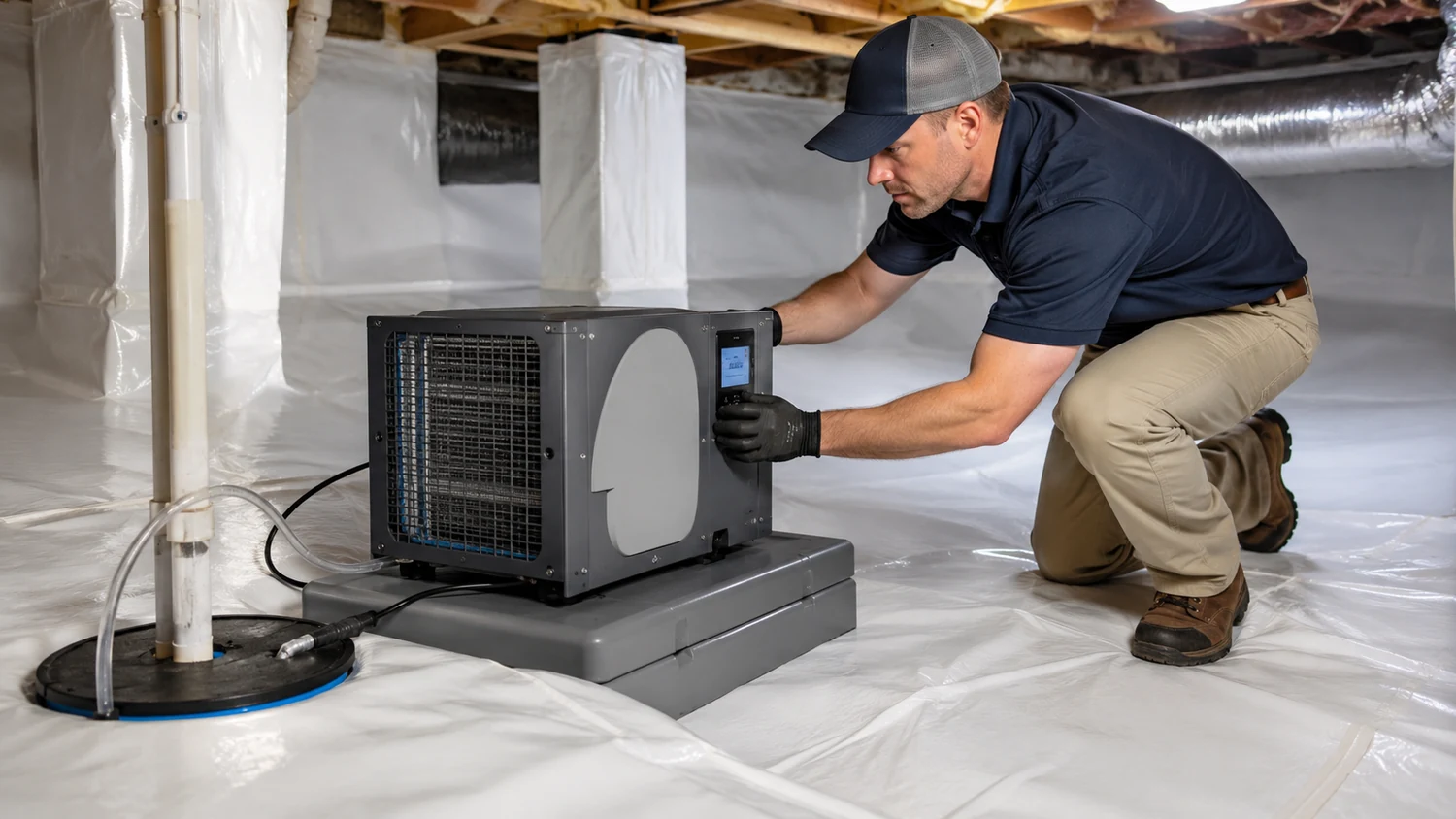
For mild humidity issues in spaces with a good vapor barrier, improving vent sealing and reducing moisture entry points may be enough. For more persistent problems — especially common in Savannah — a dedicated crawl space dehumidifier installed inside a sealed encapsulation is the most reliable solution. Unlike portable units, crawl space dehumidifiers are designed for the environment, drain continuously, and maintain setpoint humidity without manual emptying.
When to request a professional assessment
If your crawl space humidity readings are consistently above 65%, you notice a musty smell in your living areas, you see condensation on ducts or joists, or your insulation looks compressed or discolored, request a professional estimate. Catching the problem at the humidity-control stage is significantly less expensive than addressing it after mold growth has established.
See our humid crawl space Savannah page and crawl space dehumidifier guide for more information.