
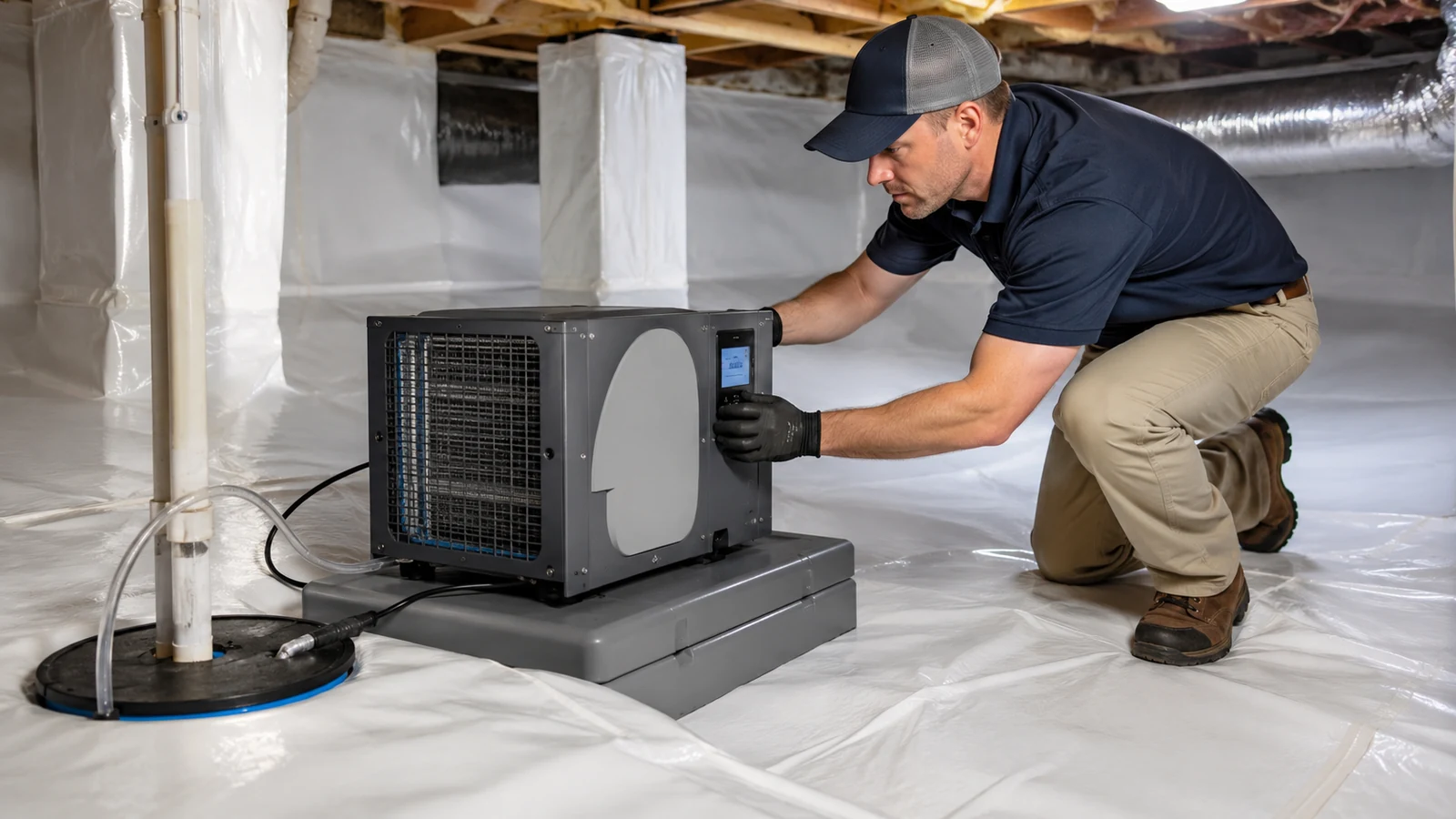
Choosing the wrong size crawl space dehumidifier is a common and expensive mistake. An undersized unit runs constantly, wears out faster, and never reaches your humidity setpoint. An oversized unit may short-cycle and fail to adequately dry the air. Here is how to think about sizing for a Savannah crawl space.
Why crawl space dehumidifiers are different from portable units
Portable room dehumidifiers are designed for livable spaces with limited square footage and normal temperature ranges. Crawl space dehumidifiers are built to operate in confined, low-clearance spaces where temperatures can drop significantly in winter, humidity levels are much higher, and continuous drainage is required. Most portable units stop functioning efficiently below 65°F and require manual emptying — neither is acceptable in a crawl space application.
How crawl space dehumidifier capacity is measured
Crawl space dehumidifiers are rated in pints of moisture removed per day under test conditions. Common crawl space units range from 70-pint to 150-pint capacity. The right size for your crawl space depends on square footage, current humidity levels, how well the space is sealed, and whether the crawl space has a history of water intrusion.
Sizing guidelines for Savannah homes
For a typical Savannah home crawl space (800–1,500 square feet, well-sealed, no history of standing water), a 70–90 pint unit is usually appropriate. For larger spaces, spaces with a history of water intrusion, or spaces that run particularly humid due to coastal exposure or low-lying location, a higher capacity unit provides more margin. A provider should assess humidity readings in your specific crawl space before recommending a size.
Drainage is non-negotiable
A crawl space dehumidifier must drain continuously — it cannot have its tank manually emptied because it will fill within hours during peak season. The drain line should run to daylight on the exterior, to a floor drain if one exists, or to a condensate pump that removes water to the outside. Ask your provider exactly where the drain line will go and how it will be secured before installation.
Electrical requirements
Most crawl space dehumidifiers require a dedicated 120V outlet near the unit location. If your crawl space does not have existing electrical access, adding an outlet adds to the installation cost. Some higher-capacity units require 240V. Confirm electrical requirements before accepting an estimate.
What to ask before approving a dehumidifier installation
Ask the provider what humidity setpoint they recommend and why. Ask about warranty terms on the equipment and on their installation labor. Ask about filter maintenance — most crawl space dehumidifiers have a washable filter that should be checked 1–2 times per year. Ask what the expected run time is during peak Savannah summer humidity conditions.
See our crawl space dehumidifier service page and encapsulation overview for related guidance.